Measured, documented, real.
We publish engineering work the way engineers document it: problems, environments, architectures, benchmarks and the method behind each number. Nothing decorated, nothing invented.
The drawings hold the answers. The system makes them readable.
Substation and network documentation turned into revision-aware, machine-readable records for a Nordic grid operator.
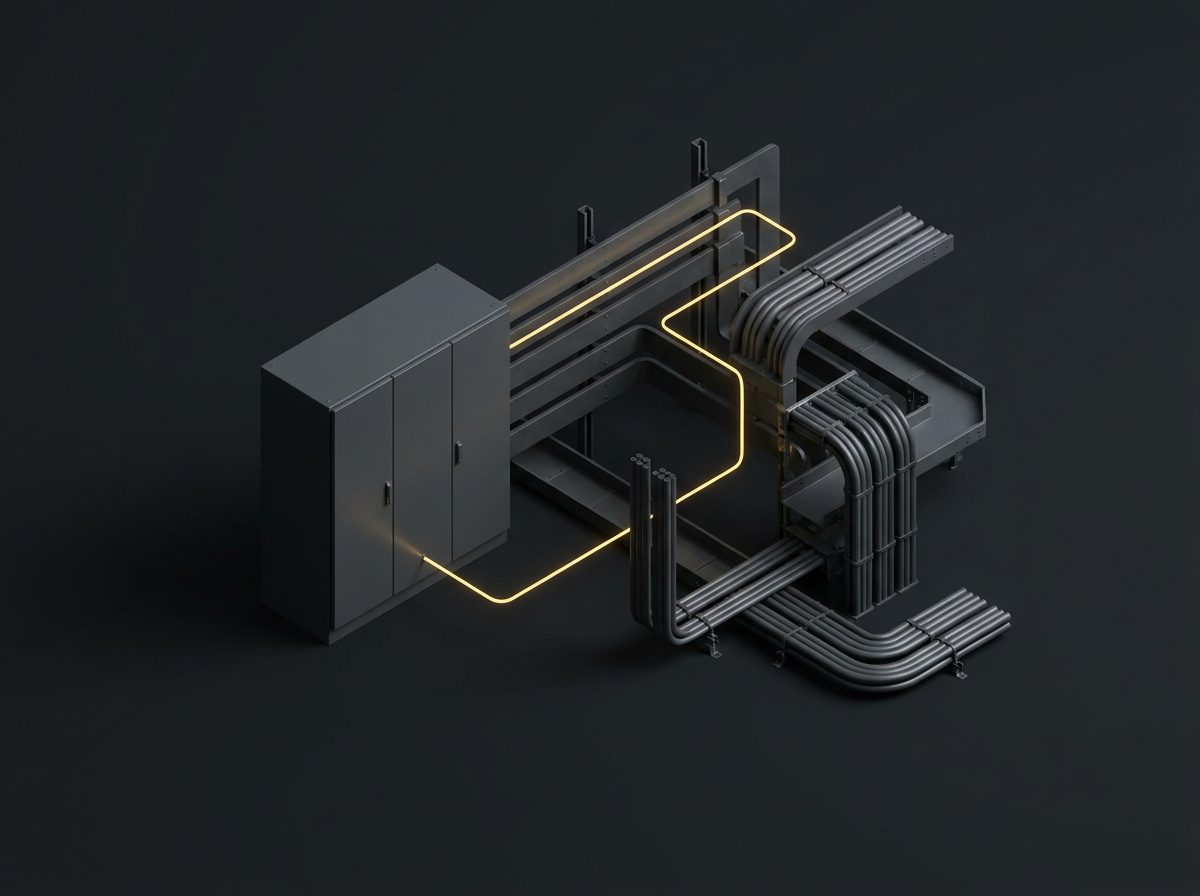
Delivered engineering documentation work, presented with the client anonymised — a Nordic grid operator.
Nothing decorated, nothing invented.
Technical work, documented.
Problems, environments, architectures and results — each story published with its method, its limits and its numbers exactly as they were measured.

TENDER DESK
A small, honest engagement: a consultancy's tender documents read clause by clause, answered from the firm's own material, with every gap named instead of filled.
NATIVE BIM HANDOFF
Connecting AI-generated design information to native Revit workflows — company families, model coordinates, parameters and production handoff.

DRAWING PRODUCTION
DWG/DXF drawing generation, structured drawing data, object placement, extraction, QA and design automation in Nordic technical design practice.

TECHNICAL DOCUMENTATION
Document intelligence in an industrial setting: classification, extraction, validation and delivery of supplier and compliance documentation into the systems that use it.
FIELD SERVICE OPERATIONS
An operations workflow for a Nordic service organisation: requests understood in context, work orders prepared, technicians briefed, reporting returned to operations.
How the systems are shaped.
Architecture examples across domains — clearly marked as system examples, not client case studies. Future verified customer cases will be published here.
AI SALES ENGINE
Research → meeting → CRM → proposal → follow-up.
COMPANY AI OS
Knowledge → agents → departments → workflows → permissions → evaluations.
DOCUMENT INTELLIGENCE
Documents → extraction → reasoning → structured data → approval → company systems.
CUSTOMER OPERATIONS
Request → context → action → human approval → response → reporting.
Answered plainly.
- Whose engineering work is shown in the case studies?
- Nordic engineering engagements, published with client details anonymised: grid documentation for an electricity network operator, a tender desk for an engineering consultancy, native BIM handoff with an MEP consultancy, drawing production, industrial technical documentation and field service operations — plus four system architecture examples.
- Why do some cases carry no measured figures?
- Because figures belong to the client who agreed to share them. Where a client publishes measured results, they appear with the methodology and its limits attached; where they do not, we describe what was built and how it was validated instead of inventing a metric to fill the template.
- How is each engagement validated?
- Acceptance runs with the people who do the work, on their own material rather than a prepared sample. Every output either names the source it came from or appears on an explicit gap list, and a named person at the client signs each release.
- How big is a typical engagement?
- Smaller than most people expect. Some remove one recurring evening from two specialists; others run an operator's documentation programme. The Forge Method assesses scope first, and the honest answer is sometimes that the work is not worth building yet.